Black Sea Sinkings
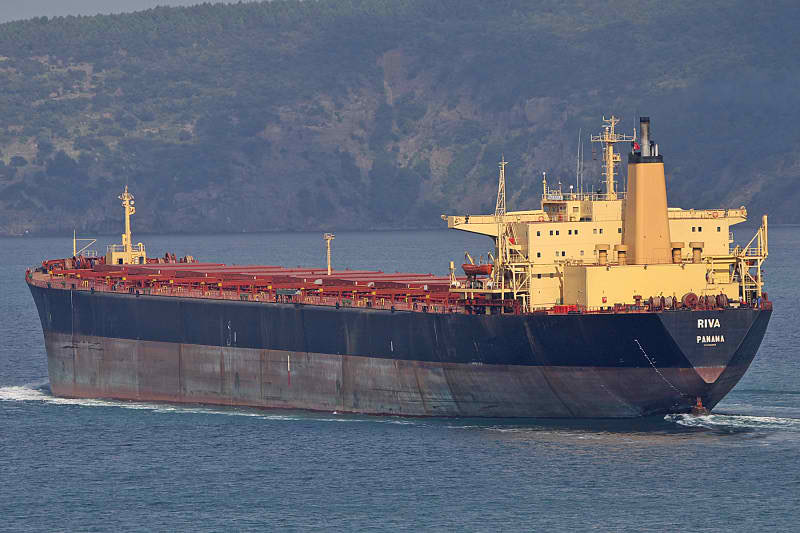

Drones have struck seven merchant ships in the Black Sea waters of Bulgaria and Romania since October 5, sinking three. More than 20 sailors are dead or missing. They follow the August 27 sinking of the PROGRESS IV in Romania's economic zone, which Romanian prosecutors are investigating as a drone strike. Bulgaria has summoned Russia's ambassador and Ukraine says Russian drones did it, but no government has published evidence of who launched them. This page tracks what is confirmed, who is claiming what, and what evidence would settle it. The strikes have now reached a NATO member's territorial sea, and Romania's foreign minister says “Russia bears full responsibility” for attacks that took eight lives in 24 hours (X); President Nicușor Dan said earlier that day it was “too early” to say for sure (Politico). That raises an open question: whether drone strikes on foreign-flagged ships inside an ally's waters amount to an attack under NATO's treaty. Some voices in Romania argue they reach Article 5, the alliance's mutual-defense clause (X). Dan says Article 5 is “not now” being discussed and that Romania has not asked for Article 4, which triggers consultations; NATO's North Atlantic Council will meet on the Black Sea (Politico).
Drones have sunk three merchant ships in Bulgarian and Romanian waters since October 5. Bulgaria now says it assumes the drones were Russian, reasoning from who benefits, and EU leaders blame Moscow. But no debris has been recovered and no government has published a finding. Russia denies targeting the ships, and both Russia and Ukraine use drones against Black Sea shipping. Romania's foreign minister blames Russia, though President Dan says it is too early to be sure.
What would change this rating ↓
blacksea.america2.newsGet America 2.0 in your inbox
Analysis of Russian influence, information warfare and the networks behind them. Free; unsubscribe anytime.
Latest reports
New reporting from major outlets and official sources, listed as it appears. Our monitoring adds headlines from major outlets automatically. "Checked" means our software fetched the full report and confirmed it supports its headline. "Reviewed" means an editor checked it against its source. "Auto" items have not been checked yet. Tap a label for our note. None of this is an endorsement. Our assessment is the rating above.
- 16 Oct, 4:57 AMBulgaria seeks NATO anti-drone systems, says defence minister (Reuters)
reviewed ▾
An editor checked this report against its source. (2026-10-16) - 15 Oct, 1:12 PMDrone strike ignites tanker off Black Sea coast amid Ukraine war fears (AP News)
reviewed ▾
An editor checked this report against its source. (2026-10-15) - 15 Oct, 12:59 PMSeven sailors missing after drones strike tankers near Romania’s Black Sea coast (The Guardian)
reviewed ▾
An editor checked this report against its source. (2026-10-15) - 15 Oct, 10:41 AMSurse: De ce nu va fi activat Articolul 4 din NATO după atacul de lângă Sulina (Euronews România)
reviewed ▾
An editor checked this report against its source. (2026-10-15) - 15 Oct, 10:41 AMNATO allies to meet over Black Sea drone attacks on shipping (POLITICO.eu)
reviewed ▾
An editor checked this report against its source. (2026-10-15) - 15 Oct, 9:35 AMNATO to address drone attacks in the Black Sea after seven missing off Romania (France 24)
reviewed ▾
An editor checked this report against its source. (2026-10-15) - 15 Oct, 9:35 AMSeven missing off Romania after latest Black Sea drone attacks (France 24)
reviewed ▾
An editor checked this report against its source. (2026-10-15) - 15 Oct, 8:58 AM7 sailors missing as two ships off Romanian Black Sea coast catch fire amid drone incursion (The Kyiv Independent)
reviewed ▾
An editor checked this report against its source. (2026-10-15) - 15 Oct, 8:48 AMSeven missing after tanker catches fire off Romanian coast (POLITICO.eu)
reviewed ▾
Our note: Romanian authorities said seven crew of the San Marino-flagged tanker Wine Trader were missing after a fire about 13 nautical miles from Sulina; five were rescued.An editor checked this report against its source. (2026-10-16) - 15 Oct, 7:35 AM2 ships on fire off Romania's Black Sea coast, 7 crew missing (DW.com)
reviewed ▾
An editor checked this report against its source. (2026-10-15) - 15 Oct, 6:25 AMSeven sailors missing after tanker fire off Romania's coast amid Russian drone fears (The Independent)
reviewed ⚠ ▾
Caution: Published before Romanian officials attributed the fires to drones; later reporting cites Dan saying both ships were hit by drones.An editor checked this report against its source. (2026-10-15) - 15 Oct, 5:34 AMSeven sailors missing after drones hit two ships near Romania (Reuters)
reviewed ▾
An editor checked this report against its source. (2026-10-15)
What would change this assessment
The rating measures how well the claim that Russia launched these strikes is supported by evidence, not how plausible it seems. Any one of these would move it.
- not seenPhysical evidence: recovered drone debris, a drone type or serial numbers, published by Bulgaria, Romania or a technical body such as the EU's maritime agency.
- partly seenAn official finding: Bulgarian or Romanian prosecutors or ministries naming the attacker on the basis of an investigation, not "logic." Romania's foreign minister says “Russia bears full responsibility”; she says investigations are under way, and no finding or evidence has been published (X). President Dan says it is “too early” to say for sure; army and intelligence teams are investigating (Politico).
- not seenAllied attribution with evidence: NATO, the EU, the US or Turkey attributing the strikes and citing radar, satellite or signals data.
- not seenA claim or credible denial of responsibility by Russia's Defence Ministry or Ukraine, with specifics.
- seenAnother strike in Bulgarian or Romanian waters, or one inside their 12-mile territorial seas. The Yara J was hit inside Romania's territorial waters on Oct. 14 (Reuters); Romania's foreign minister says four ships were targeted in 24 hours, including in its territorial waters (X).
What is actually known
- Five ships hit on three nights. October 5: the Royad Mammadov, carrying Ukrainian corn, caught fire and sank off Romania; Romania reported two dead and 11 rescued (Reuters). October 6: the Alfa Watan sank almost instantly about 70 nautical miles east of Bulgaria; all ten crew, nine Syrian and one Egyptian, are presumed dead. The Able, carrying wheat, was set ablaze and its 18 crew rescued (Reuters, Al Jazeera). Night of October 12–13: the Ukrainian-owned Chelsea 3 was hit three times by drones (Bulgarian officials have described them both as aerial and as sea drones) and all 15 crew were rescued; the HS Dignity sank 17 nautical miles off Krapets, with five rescued and 11 missing, a figure officials call preliminary (AFP, 24chasa). Earlier, on August 27, the PROGRESS IV sank about 20 nautical miles off Romania's Sfântu Gheorghe after what Romania's defence minister said was a drone strike; all 12 crew were rescued, and prosecutors opened a criminal case that includes operating an unmanned aircraft carrying explosives (Gândul).
- Romania's president says drones hit two tankers off Sulina. On October 15 Nicușor Dan said the Yara J and the Wine Trader had been “hit” by “air drones” (AFP), but declined to say whether Russia was responsible. A NATO military source, not named, told Reuters the drones “were of Russian origin” (Reuters). Moscow said it hit two cargo ships carrying military cargo to Odesa, without naming them (BBC); the Wine Trader was empty (AFP).
- Most of the ships are not Ukrainian. Three of the five are Turkish-owned or Turkish-managed; only the Chelsea 3 is Ukrainian-owned. Two carried Ukrainian grain; the cargo of the two that sank in Bulgarian waters has not been published (Reuters).
- Bulgaria has moved, but has no evidence in hand. On October 9 Defence Minister Dimitar Stoyanov said it was "entirely possible" the drone was Ukrainian or Russian, and that no debris had been found (Club Z). On October 13 he said it would be "illogical for the Ukrainians to strike their own ships. Under these circumstances, we assume the drones are Russian." Prime Minister Rumen Radev wrote that "logic suggests the outcome works to the advantage of the Russian Federation," and summoned Russia's ambassador (AFP). Radev has also said Bulgaria lacks "solid and clear evidence" against either side (Reuters). On October 14 he told parliament: “The logic points in that direction. The problem is that we cannot prove it” (AP).
- No debris has been recovered. Inspectors found no drone remains on the burned-out Able (Club Z). Bulgaria has asked the EU's maritime safety agency, the US and NATO for technical help, and says it will name the attacker only after technical analysis. On October 14 Radev told parliament the Chelsea 3 will be towed to Varna this week for a thorough inspection, and that Bulgaria expects deep-water equipment to examine both wrecks (Mediapool; Novinite, Capital).
- Russia denies targeting the first two ships. Its embassy said they were "not among the targets" hit by Russian forces (Fakti), and its ambassador did not rule out a "provocation by a third party" (Reuters). Russia's Defence Ministry has made no public comment on the October 13 strikes. It claims near-daily drone strikes on cargo ships "at sea" bound for Ukrainian ports, without naming ships or locations (Telegram); Britain told the OSCE that on October 5 the ministry announced strikes on "two cargo vessels in the Black Sea" (GOV.UK).
- Both sides use drones against Black Sea shipping. Russia strikes Ukrainian ports and Ukraine-bound ships; Ukraine strikes Russian tankers and grain ships. The maritime risk firm Ambrey counted at least 45 merchant ships attacked in the past 12 months in waters with no attacks the year before (AFP). Turkish-owned ships have been hit on both sides: in August two were struck by drones after leaving Russia's port of Novorossiysk (Turkish Foreign Ministry). That is why attribution here is not obvious.
Claims in circulation
The most-shared claims, and what public sources can confirm.
DisputedA joint Ukrainian-Bulgarian check "established" a Russian sea-and-air drone attack
Origin. President Zelensky on October 6, saying Ukraine's navy contacted Bulgaria's (Reuters).
What the evidence shows. Bulgaria's prime minister said no such identification was shared with Bulgaria and that the claim was Zelensky's "own responsibility" (DW). No joint finding has been published.
Bottom line. An assertion, not a shared finding.
Unproven"Russia strikes" the ships (headlines)
Origin. Trade-press and Ukrainian headlines from October 6–7 onward, and EU leaders' statements on October 13 (Politico).
What the evidence shows. Russia is the leading suspect for Bulgaria, Ukraine and EU leaders, but every attribution so far rests on logic or on unreleased intelligence, not on published evidence.
Bottom line. Plausible, widely asserted, not yet shown.
UnconfirmedBulgarian intelligence reports are "categorical" that Russia did it
No evidenceThe sunken ship carried weapons or soldiers
Origin. Bulgarian politicians on television, October 9 (Fakti).
What the evidence shows. No cargo manifest or official statement supports it. A small cargo ship sinking within minutes is also consistent with several drone hits.
Bottom line. No evidence.
No evidenceUkraine did it as a "false flag"
Origin. Bulgaria's pro-Russian Revival party and anonymous social-media comments.
What the evidence shows. Nothing published supports it. Bulgaria's ministers say a Ukrainian strike on a Ukrainian-owned ship would be illogical, though that argument covers only one of the five ships.
Bottom line. No evidence.
What independent experts say
- Ruslan Trad, nonresident fellow, Atlantic Council's Digital Forensic Research Lab: on October 8, "probable but unproven" Russian responsibility, adding that Bulgarian institutions "lack experience in attributing maritime drones" (DW).
- Nikolay Radulov, Bulgarian security analyst: even recovered debris would not conclusively settle responsibility; the core problem is detection (Novinite).
What to watch next
- The inspection of the Chelsea 3 in Varna, and any deep-water survey of the HS Dignity, which lies at about 100 metres.
- Bulgaria's planned referral to the UN Security Council with Romania and Turkey (Offnews).
- Results of any technical analysis Bulgaria receives from the EU, the US or NATO, and whether debris is recovered from the Able or the wrecks.
- The EU summit on October 15–16, where Bulgaria plans to raise the strikes, and any NATO consultations.
- Final casualty counts for the HS Dignity and the Royad Mammadov, and the ships' cargo and routes.
- Whether Russia's Defence Ministry lists or denies the October 13 strikes.
- Syria's call for an independent international probe into the Alfa Watan sinking (Reuters).
Timeline
- Oct. 5Royad Mammadov hit and sunk off Romania; two dead (Euronews). Zelensky blames Russian drones.
- Oct. 6Alfa Watan sunk and Able set ablaze in Bulgaria's economic zone; Radev says the drones are "either Russian or Ukrainian" (Sofia Globe). Zelensky claims a joint finding.
- Oct. 7Search for the Alfa Watan crew ends. Russia's embassy says the ships were not Russian targets.
- Oct. 9Stoyanov: "entirely possible" the drone is Ukrainian or Russian; no debris found.
- Oct. 13Chelsea 3 hit and HS Dignity sunk off Bulgaria; 11 missing. Bulgaria summons Russia's ambassador; Stoyanov says "we assume the drones are Russian." America 2.0 opens this tracker.
- Oct. 14The Comoros-flagged tanker Yara J catches fire while anchored in Romania's territorial waters near Sulina; the crew is safe. Romania's defence minister says it is unclear whether a drone hit the ship and an investigation is pending (Al Jazeera).
- Oct. 15The San Marino-flagged tanker Wine Trader catches fire 13 nautical miles off Sulina, just outside Romania's territorial waters; seven of its 12 crew are missing (Reuters). The Yara J, hit the night before, was inside them.
- Oct. 15Romania's president, Nicușor Dan, says “there will surely be a reaction,” then meets NATO Secretary General Mark Rutte with Bulgaria's prime minister (Euronews). Dan says both ships were “hit” by “air drones” (AFP). NATO will discuss the attacks at next week's ambassadors' meeting (AFP).
- Oct. 16Bulgaria formally asks NATO for combat aircraft, anti-drone systems and additional forces on its territory, Defence Minister Dimitar Stoyanov says; NATO ambassadors will take it up next week (Reuters).